
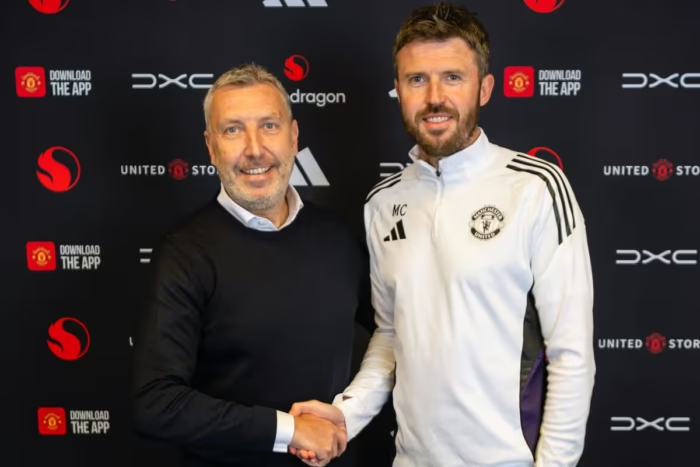
When Jason Wilcox arrived at Manchester United, his appointment was presented as another key step in the club’s footballing reset. After years of instability, poor recruitment and a lack of clear sporting direction, United supporters were told a modern football structure was finally being assembled.
More than a year on, however, there remains a growing question around Wilcox’s role: where is the evidence that Manchester United’s Director of Football is making a meaningful difference?
The title itself carries significant responsibility. A Director of Football is not simply an observer of events. The role exists to shape recruitment strategy, oversee football operations, establish a long-term vision and ensure decisions are made in the club’s best interests rather than as short-term reactions.
At Manchester United, many of the fundamental problems that existed before Wilcox’s arrival still appear unresolved.
Recruitment Concerns Remain
One of the primary measures of any football executive is recruitment.
Manchester United’s transfer business continues to raise as many questions as answers. The squad remains unbalanced in key areas, significant sums continue to be spent on players who are yet to demonstrate consistent value, and there remains uncertainty over whether signings are being made according to a coherent long-term strategy.
Supporters can accept mistakes. Every sporting director signs players who fail to deliver. What they struggle to accept is the absence of a visible plan.
If Wilcox is central to football decision-making, he should be judged on whether United are building a squad equipped to challenge the Premier League’s elite. At present, there is little evidence that gap has been significantly reduced.
A Lack of Visible Identity
Modern successful clubs possess a football identity that survives changes in managers.
Manchester City, Arsenal and Liverpool all have clear profiles when recruiting players. Coaches come and go, but the wider sporting vision remains intact.
Manchester United still appear to be searching for that identity.
The squad contains players signed for different coaches with differing tactical demands. Questions remain over the preferred style of play, the age profile of recruitment and the club’s long-term development model.
A Director of Football should help eliminate such uncertainty. Instead, many supporters still find it difficult to explain exactly what footballing philosophy United are building towards.
Academy Integration Has Yet to Become a Strength
Wilcox arrived with an impressive reputation for youth development, particularly after his work at Manchester City’s academy and Southampton.
That background naturally created expectations that Manchester United would become even more effective at integrating young talent into the first team.
While individual youngsters have received opportunities, there has not yet been a notable transformation in the pathway from academy to senior football.
United remain a club that celebrates its youth tradition, but the challenge for Wilcox is ensuring that tradition translates into a repeatable modern process rather than relying on occasional breakthroughs.
Accountability Comes With the Job
It is important to acknowledge that Wilcox does not operate alone.
Ownership, financial restrictions, executive leadership and coaching staff all influence football decisions. No Director of Football can single-handedly solve every problem at a club as large and complicated as Manchester United.
However, accountability is part of the role.
When results are poor, recruitment is questioned and strategic direction remains unclear, scrutiny naturally falls on those responsible for football operations.
Wilcox was brought in to help create a smarter, more efficient and more successful football department. If supporters are still asking what exactly has changed, that should concern him.
Time Is Running Out for Excuses
Manchester United have spent years talking about rebuilding.
At some point, discussion must be replaced by evidence.
The club’s supporters do not expect miracles. They understand that years of poor decision-making cannot be reversed overnight. What they do expect is visible progress, a clear football strategy and a squad being constructed with purpose.
Jason Wilcox may yet prove to be the right man for the job. But a Director of Football is ultimately judged on outcomes, not reputation.
Right now, the signs of meaningful transformation remain difficult to identify, and until that changes, questions about whether he is truly fulfilling the responsibilities of Manchester United’s Director of Football will continue to grow louder.
Written by Paul
About the Author

Discover more from Daily Man Utd News
Subscribe to get the latest posts sent to your email.


