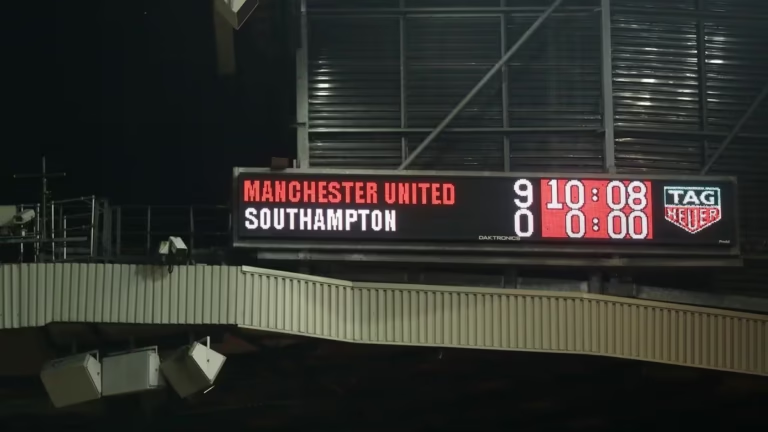
Ole Gunnar Solskjær is the embodiment of Manchester United romance — a player who arrived quietly, scored loudly, and carved his name into club mythology with moments of pure destiny. He was the ultimate super‑sub, a striker whose intelligence, timing, and ice‑cold finishing made him one of the most reliable match‑winners of the Ferguson era. And later, as manager, he became the emotional bridge between United’s past and its future. For supporters, Solskjær represents joy, loyalty, and the magic of believing until the final second. His legacy is that of a hero — humble, deadly, and eternally loved.

The Origin Story — How He Became United
Solskjær joined United from Molde in 1996 for just £1.5 million — a signing that barely made headlines. Ferguson saw something others didn’t: intelligence, movement, and a striker’s instinct. Ole scored on his debut and never stopped. United needed depth behind Cantona, Cole, and Yorke; Solskjær became the perfect fourth forward. He didn’t complain, didn’t demand, didn’t sulk — he simply delivered. His professionalism and humility made him a favourite of Ferguson and the fans alike.

Tactical Identity — What Made Him Special on the Pitch
Solskjær was a master of timing and intelligence:
- Clinical finishing: Right foot, left foot, headers — always calm, always precise.
- Movement: Drifted into pockets defenders couldn’t track, arriving at the perfect moment.
- Super‑sub mentality: Read games from the bench, entered with clarity, and changed matches.
- Versatility: Played centrally, wide right, or even deeper when needed.
- Football IQ: Understood space, tempo, and defensive weaknesses better than almost anyone.
He wasn’t the fastest or strongest — he was the smartest.
The Defining Moments
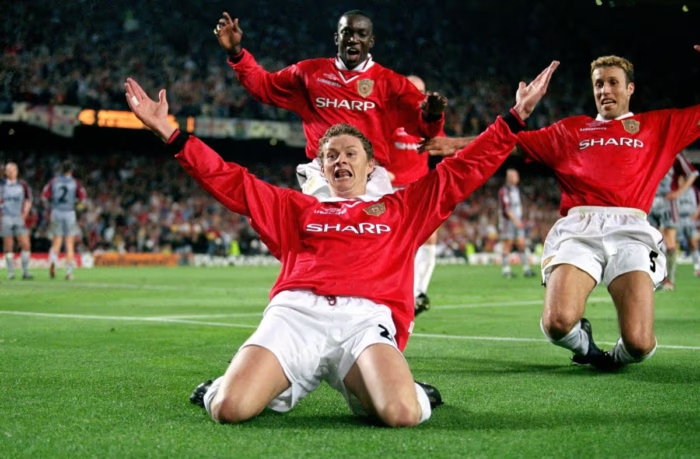
- 1999 — Champions League Final vs Bayern Munich: The most famous moment of his career. Injury time. Corner. Flick‑on. Solskjær stretches, scores, and completes the treble. A goal that changed football history.
- 1998 — Four goals in 12 minutes vs Nottingham Forest: A display of ruthless finishing.
- Countless late winners: Ole became synonymous with clutch moments — the man who always delivered when United needed him.
- 2002 — Tactical masterclass vs Newcastle: Played wide right and produced one of his most complete performances.
- Return as manager (2018): Won his first 14 away games, including the iconic comeback in Paris.
His defining moments are stitched into United folklore.

Cultural Impact — Beyond the Pitch
Solskjær became a symbol of United’s values:
- Humility: Soft‑spoken, respectful, and deeply loyal.
- Professionalism: Trained with intensity, studied the game, and embraced every role.
- Connection with fans: His smile, his attitude, and his love for the club made him universally adored.
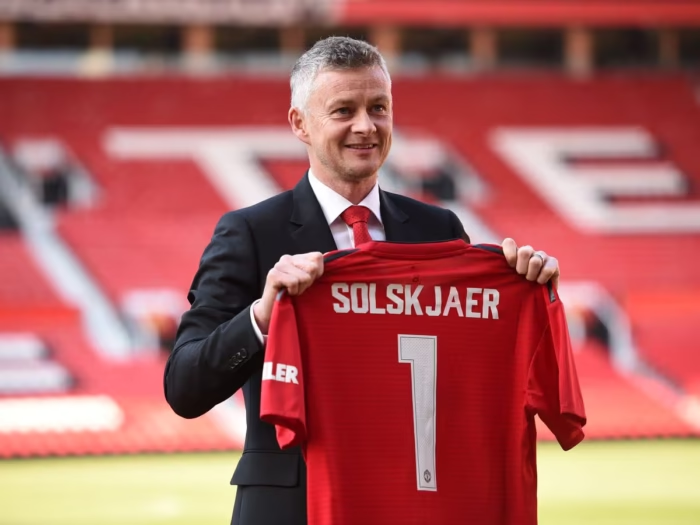
- Managerial legacy: Restored pride, rebuilt culture, and gave fans belief during a turbulent era.
- Emotional identity: “Ole’s at the wheel” became a cultural moment in itself.
He wasn’t just a player or manager — he was a guardian of United’s spirit.
The Legacy — What Endures Today
Solskjær’s legacy is multi‑layered:
- One of the greatest super‑subs in football history.
- A treble hero whose goal defined an era.
- A loyal servant who gave United 25 years of dedication as player and manager.
- A cultural figure who reconnected fans with the club’s identity.
- A mentor whose influence shaped players like Rashford, Greenwood, McTominay, and Bruno.
His name will always evoke warmth, joy, and belief.

The Verdict — Why He Is a United Idol
Ole Gunnar Solskjær is a United Idol because he represents everything beautiful about football: loyalty, humility, clutch brilliance, and emotional connection. He scored the most important goal in Manchester United history and later returned to restore pride and identity. Solskjær didn’t just play for United — he lived the dream, and he made millions believe in magic.
Written by Paul
About the Author

Discover more from Daily Man Utd News
Subscribe to get the latest posts sent to your email.