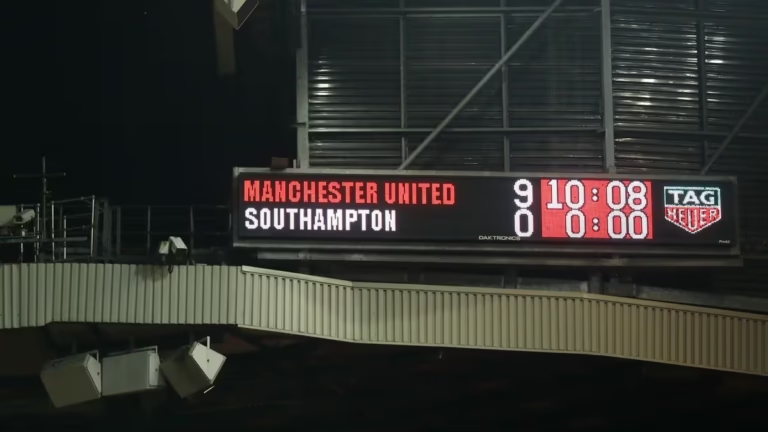
A deep dive into the transformation of a young winger who went from national scapegoat to one of the most influential footballers of his generation.
The Fall — France ’98 and the Weight of a Nation
David Beckham entered the 1998 World Cup as England’s brightest young talent. He left it as the country’s villain.
His red card against Argentina — a flick of the leg at Diego Simeone — became a national obsession. The backlash was brutal:
- Newspapers targeted him.
- Rival fans taunted him.
- Effigies were burned.
- Every mistake was magnified.
For a 23‑year‑old, it was a storm few could survive.
But Beckham didn’t break.
He rebuilt.

The Rebirth — Ferguson’s Faith and Beckham’s Resolve
Sir Alex Ferguson didn’t just protect Beckham — he challenged him.
He demanded maturity.
He demanded discipline.
He demanded evolution.
Beckham responded with:
- Relentless training
- Sharper decision‑making
- Improved defensive work
- A new level of professionalism
The boy who bent under pressure became the man who thrived under it.
The 1998/99 Season — Beckham at His Peak
The treble season wasn’t just United’s greatest campaign — it was Beckham’s masterpiece.
What changed?
- Delivery: His crossing reached a level of surgical precision.
- Work rate: He covered every blade of grass, tracking back with ferocity.
- Mentality: No sulking, no theatrics — just leadership.
- Influence: He dictated tempo from the right flank like a quarterback.
Beckham became the engine of United’s wide play, the heartbeat of transitions, and the man teammates trusted in moments of chaos.
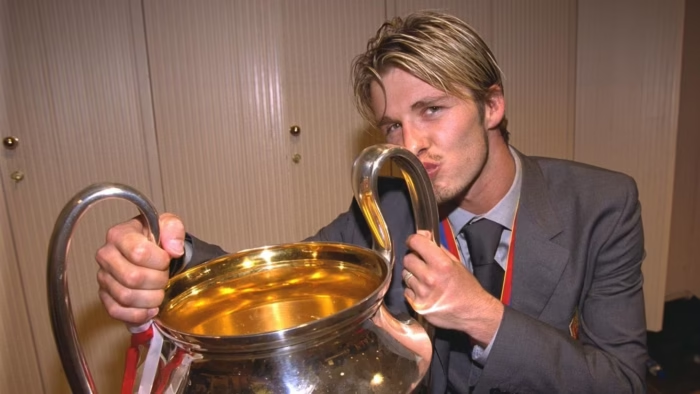
The Defining Moments of His Evolution
The FA Cup Semi-Final Replay vs Arsenal
Keane sent off. Pressure rising.
Beckham steps up with a stunning long‑range strike to make it 1–0.
A goal of technique and courage — symbolic of his new identity.
The Champions League Final, Camp Nou
United needed perfect delivery.
Beckham provided it — twice.
His corners created the chaos that led to Sheringham and Solskjær’s immortal goals.
He didn’t score, but he controlled the biggest match in club history.
The Premier League Run-In
Game after game, Beckham was United’s metronome:
- Switching play
- Creating chances
- Driving the team forward
- Setting standards with his work ethic
He became a leader not through shouting, but through excellence.
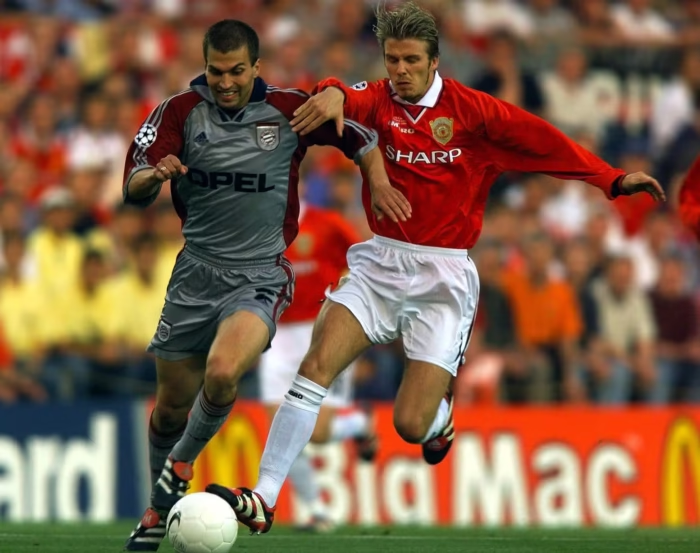
The Transformation — From Target to Torchbearer
Beckham’s evolution wasn’t just tactical — it was emotional.
He learned to:
- Channel pressure into performance
- Ignore noise and focus on craft
- Carry responsibility without complaint
- Represent United with dignity and professionalism
The same fans who mocked him began to admire him.
The same media that vilified him began to praise him.
The same country that burned his effigy began to celebrate his free‑kick heroics.
He didn’t just recover — he transcended.
The Legacy of Beckham’s Evolution
Beckham’s journey remains one of football’s greatest redemption arcs.
He became:
- A global icon
- A leader in United’s dressing room
- A symbol of resilience
- A master of his craft
- A role model for young players
His transformation showed that adversity doesn’t define you — your response does.

Final Verdict
David Beckham’s evolution from villain to world‑class leader is one of the most compelling stories in Manchester United history.
He turned humiliation into motivation.
He turned pressure into performance.
He turned doubt into dominance.
By 1999, Beckham wasn’t just a winger.
He was a leader, a creator, a symbol — and a cornerstone of the greatest season English football has ever seen.
Written by Paul
About the Author

Discover more from Daily Man Utd News
Subscribe to get the latest posts sent to your email.