
Rio Ferdinand is the defender who changed what Manchester United — and English football — believed a centre‑back could be. He played with a calmness that felt supernatural, a grace that made defending look effortless, and an intelligence that allowed him to control games from the back. Ferdinand wasn’t just part of United’s success; he was one of its architects, shaping the rhythm, the structure, and the confidence of Ferguson’s greatest teams. For supporters, he represents elegance fused with authority — a player who made the hardest job on the pitch look like art.

The Origin Story — How He Became United
United signed Ferdinand from Leeds United in 2002 for £30 million, making him the most expensive defender in the world. Ferguson wanted a new kind of centre‑back: someone who could defend with dominance but also build play with composure. Ferdinand arrived as a prodigy and quickly became a pillar. His early years included adaptation and controversy, but his response was elite professionalism. By the mid‑2000s, he was the best defender in England — and by 2007, he was the foundation of a team ready to conquer Europe.

Tactical Identity — What Made Him Special on the Pitch
Ferdinand was a prototype for the modern defender:
- Ball‑playing excellence: Carried the ball out of defence with elegance, breaking lines and dictating tempo.
- Positional intelligence: Rarely needed to dive into tackles; he prevented danger before it appeared.
- Recovery pace: Allowed United to play high, aggressive lines without fear.
- Composure: Never flustered, even in the biggest moments.
- Leadership: Vocal organiser, emotional anchor, and a standard‑setter.
His partnership with Nemanja Vidić became legendary — the perfect blend of silk and steel.
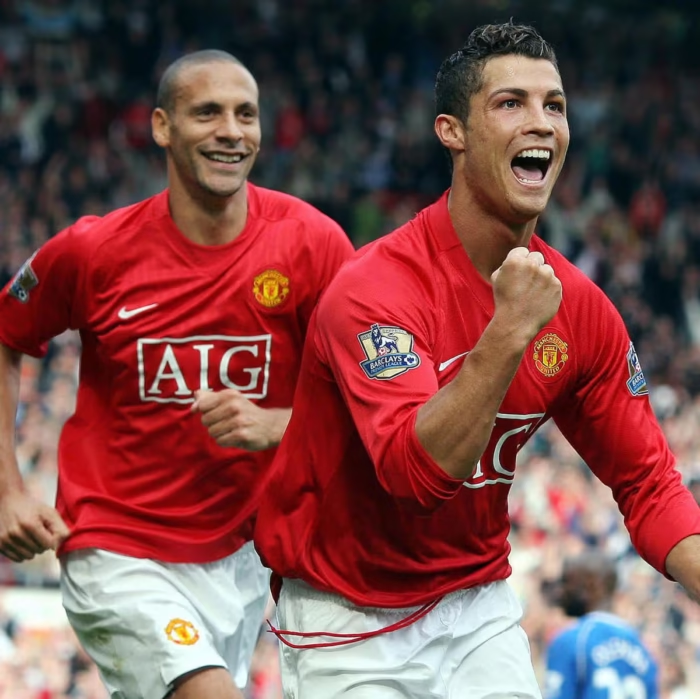
The Defining Moments
- 2007 — Champions League semi‑final vs Milan: A commanding performance that signalled his rise to Europe’s elite.
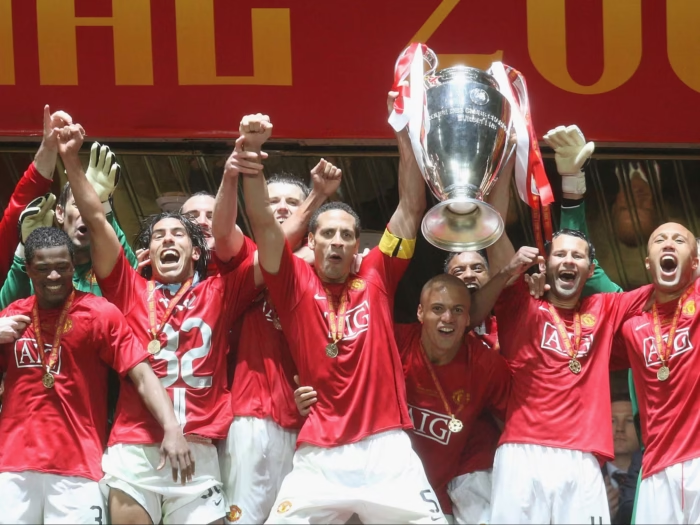
- 2008 — Champions League Final: Immense leadership and composure in Moscow as United lifted the trophy.
- 2008–09 — Defensive dynasty: Central to the back line that kept 14 consecutive clean sheets — a Premier League record.
- 2013 — Volley vs Swansea: A captain’s goal in Sir Alex Ferguson’s final home match, symbolic and emotional.
- Countless derby and Champions League battles: Ferdinand’s consistency in big games defined his legacy.
His moments weren’t always spectacular — they were authoritative, decisive, and rooted in mastery.
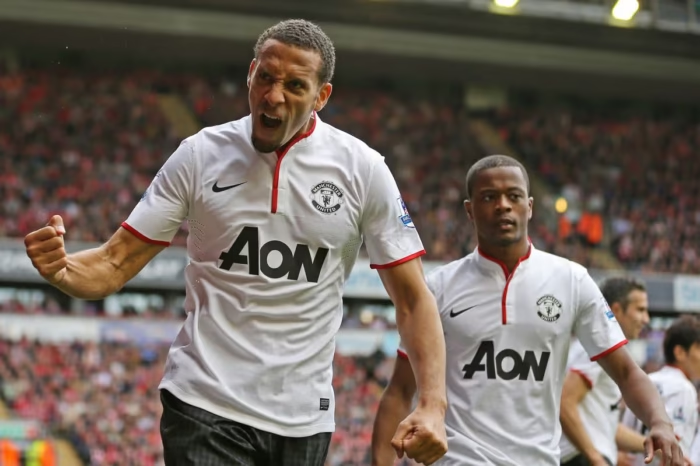
Cultural Impact — Beyond the Pitch
Ferdinand became a cultural icon at United:
- Leader of standards: Demanded excellence in training and matches.
- Moderniser: Helped bring a new level of professionalism and tactical sophistication to the squad.
- Voice of the dressing room: Respected by teammates, feared by opponents.
- Ambassador for the club: Intelligent, articulate, and influential beyond football.
He represented the evolution of United — a club embracing modern football without losing its identity.

The Legacy — What Endures Today
Ferdinand’s legacy is monumental:
- He redefined the English centre‑back.
- He remains one of the greatest defenders in Premier League history.
- His partnership with Nemanja Vidić is still studied by coaches worldwide.
- He set the standard for ball‑playing defenders at United.
- His leadership shaped a generation of players.
Modern defenders — Raphael Varane, Lisandro Martínez, even young prospects — are judged against the Ferdinand blueprint.
The Verdict — Why He Is a United Idol
Rio Ferdinand is a United Idol because he brought elegance to a position defined by chaos. He defended with intelligence, led with authority, and helped build one of the greatest teams in club history. Ferdinand didn’t just stop attacks — he started them. His legacy is that of a pioneer, a champion, and one of the most complete defenders ever to wear the red shirt.
Written by Paul
About the Author

Discover more from Daily Man Utd News
Subscribe to get the latest posts sent to your email.


